About Red Cross and Chandannagar Branch
Red Cross – Genesis
The Red Cross originated from Swiss businessman Jean Henry Dunant's experiences at the Battle of Solferino in June 1859 in Italy, where he witnessed the suffering of wounded soldiers and organized emergency aid services for Austrian and French wounded. Appalled by the lack of care, he wrote Un Souvenir de Solferino (1862; A Memory of Solferino), proposing the creation of neutral relief societies and an international treaty to protect the wounded. This led to a conference in 1863, resulting in the creation of the International Committee for the Relief of the Wounded, which spurred the 1864 Geneva Convention and the formation of Red Cross societies. To honor Switzerland, the emblem chosen was the Swiss national flag's colors reversed: a red cross on a white background.
Established to care for victims of battle in times of war, National Red Cross societies later expanded to aid in the prevention and relief of human suffering generally. Peacetime activities include first aid, accident prevention, water safety, training of nurses’ aids and mothers’ assistants, and maintenance of maternal and child welfare centers, medical clinics, blood banks, and numerous other welfare services.
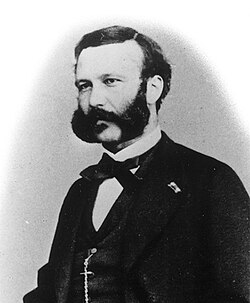
Jean Henry Dunant
Fundamental Principles - Red Cross
- Humanity: The International Red Cross and Red Crescent Movement, born of a desire to bring assistance without discrimination to the wounded on the battlefield, endeavors to prevent and alleviate human suffering wherever it may be found. Its purpose is to protect life and health and ensure respect for the human being, promoting mutual understanding, friendship, cooperation, and lasting peace amongst all people.
- Impartiality: It makes no discrimination as to nationality, race, religious beliefs, class, or political opinion. It endeavors to relieve the suffering of individuals, guided solely by their need, giving priority to the most urgent cases of distress.
- Neutrality: To enjoy the confidence of all, the Movement may not take sides in hostilities or engage in controversies of a political, racial, religious, or ideological nature.
- Independence: The Movement is independent. National Societies, while auxiliaries in their governments’ humanitarian services and subject to national laws, must maintain autonomy to act in accordance with the Movement’s principles.
- Voluntary Service: It is a voluntary relief movement not prompted by desire for gain.
- Unity: There can be only one Red Cross Society in any one country, open to all, carrying out humanitarian work throughout its territory.
- Universality: The International Red Cross and Red Crescent Movement, in which all Societies have equal status and share equal responsibilities and duties, is worldwide.
Indian Red Cross Society
The Indian Red Cross Society (IRCS) was established in 1920 under the Indian Red Cross Society Act, incorporated under Parliament Act XV of 1920 (amended by Act No. 22 of 1956, the Adaptation of Laws (No. 4) order of 1957, and Act No. 14 of 1992). It is a member of the International Federation of the Red Cross and Red Crescent Societies and recognized by the International Committee of the Red Cross. The IRCS acts as an auxiliary to the state in humanitarian activities. During wartime, it supports armed forces medical services and assists affected civilians per the Geneva Conventions. It saves lives, protects livelihoods, provides relief during disasters and emergencies, and runs medical facilities, blood services, and welfare activities. The Hon’ble President of India is the President of the Society, and the Hon’ble Union Minister for Health & Family Welfare is the Chairman.
Mission and Objectives
The IRCS aims to inspire, encourage, and initiate all forms of humanitarian activities to minimize, alleviate, and prevent human suffering, contributing to a more peaceful climate. Its mission is to prevent and alleviate suffering with complete impartiality, without discrimination based on nationality, race, sex, religious beliefs, language, class, or political opinions. Its tasks include:
- Acting in armed conflicts and preparing in peacetime for roles under the Geneva Conventions and International Humanitarian Law for all war victims.
- Improving health, preventing disease, and supporting maternity and child care in communities.
- Educating the population on disaster preparedness and response.
- Organizing emergency relief services for disaster victims and mitigating their suffering.
- Promoting participation of children and youth in Red Cross work.
- Promoting the Movement’s Fundamental Principles and International Humanitarian Law to inculcate humanitarian ideals, especially among children and youth.
- Recruiting, training, and developing volunteers for humanitarian responsibilities.
- Serving the community within its jurisdiction, with state branches initiating activities to address local needs as approved by their Managing Body.
- Ensuring correct use of the Red Cross emblem to maintain its protective value.
Indian Red Cross Society, Chandannagar Sub-Divisional Branch
The Indian Red Cross Society, Chandannagar Sub-Divisional Branch, is one of the many branches across India. It operates under the guidance of the West Bengal State Branch, presided over by the Honorable Governor of West Bengal, and at the district level, by the Hooghly District Committee, presided over by the District Magistrate. The SDO, Chandannagar Sub-Division, serves as the ex-officio Chairman of this Branch.